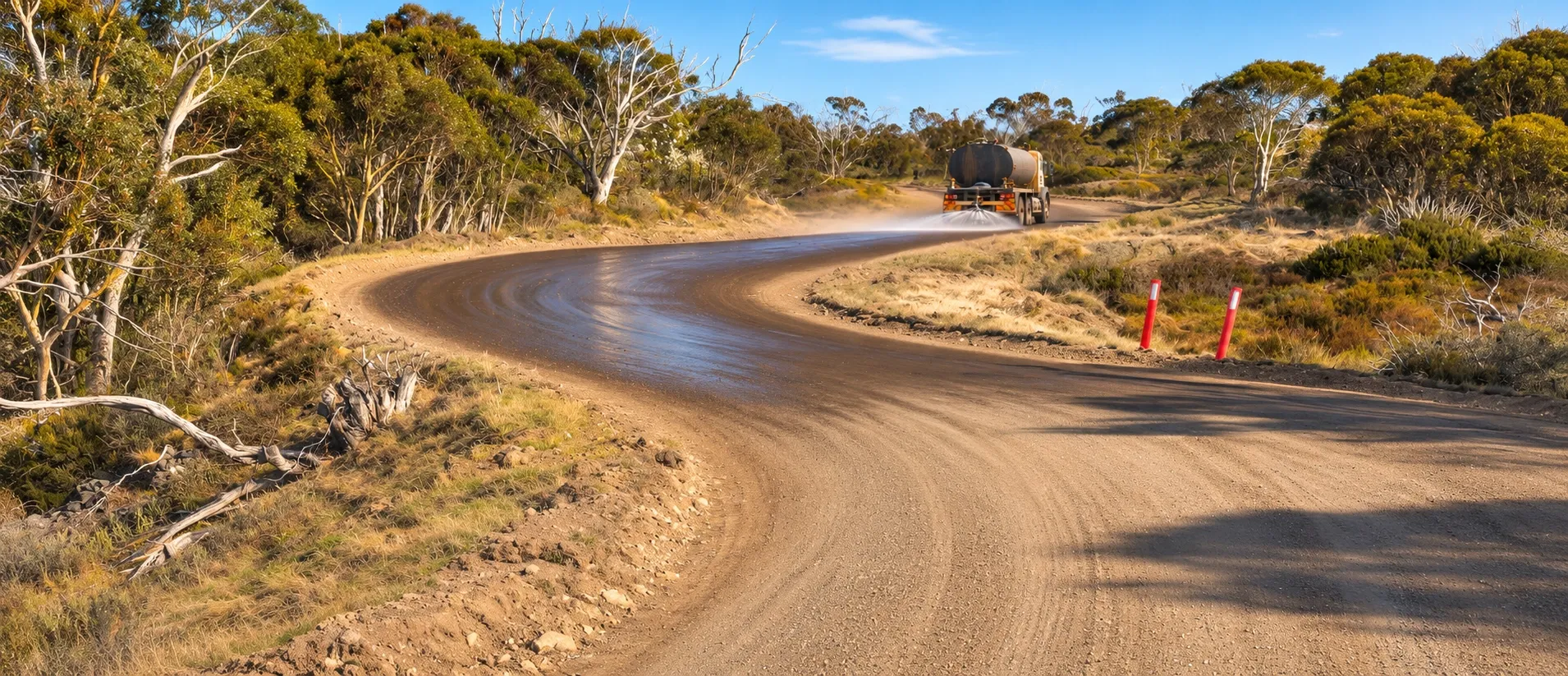
A water tanker spraying RDC along a winding bush road

RDC

More than dust suppression.Protecting the pavement from within.

Gravel Lock RDC is a specially formulated treatment that penetrates unsealed pavement, attracting and retaining moisture rather than just forming a surface coating.

By keeping fine materials bound within the road structure, RDC helps reduce dust, surface deterioration and pavement material loss. Rural roads treated with RDC have demonstrated performance exceeding 12 months, with minimal deformation, potholing or loss of pavement fines. This helps maintain a dust-free running surface, reduces ongoing road maintenance and improves safety for road users.

Applied to existing roads or during construction, RDC improves dust control, reduces water cart requirements and helps maintain a tighter, more stable running surface with lower ongoing maintenance costs.

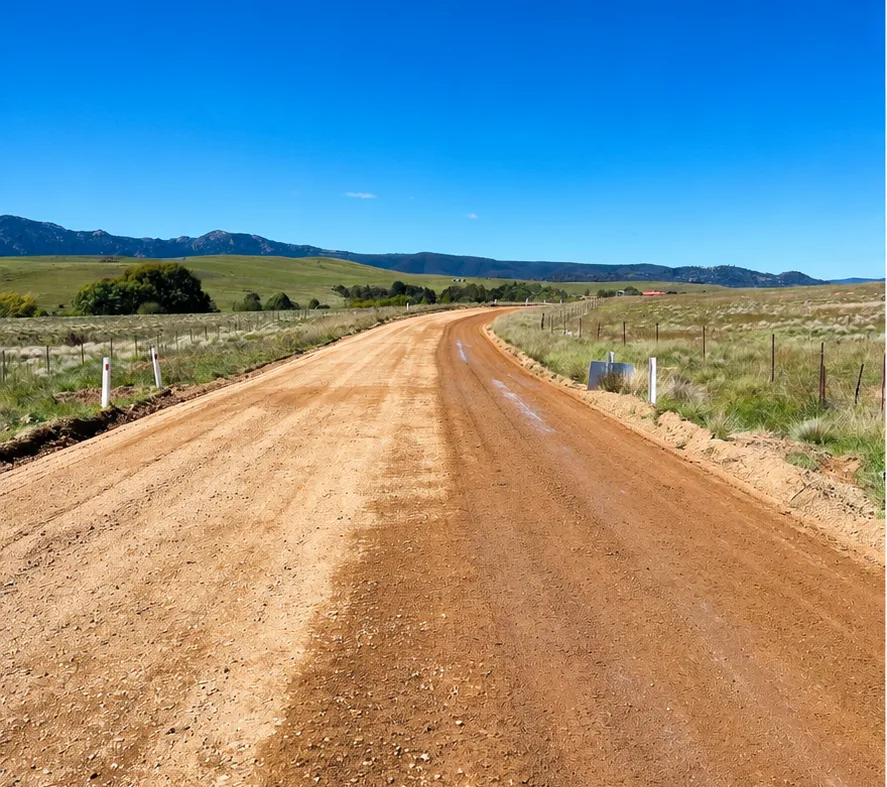
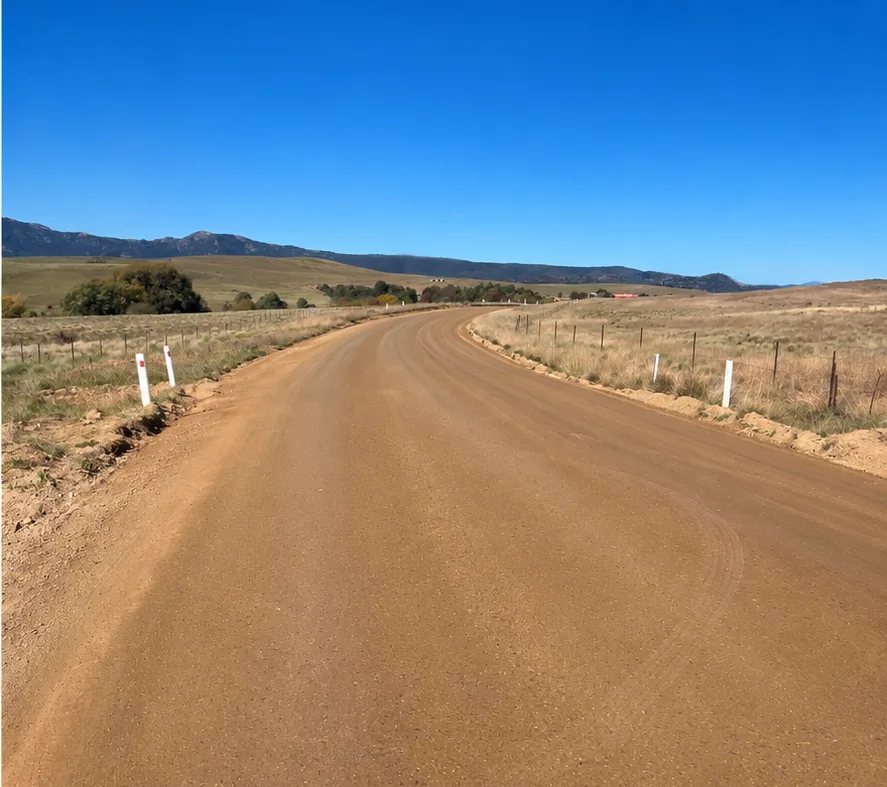
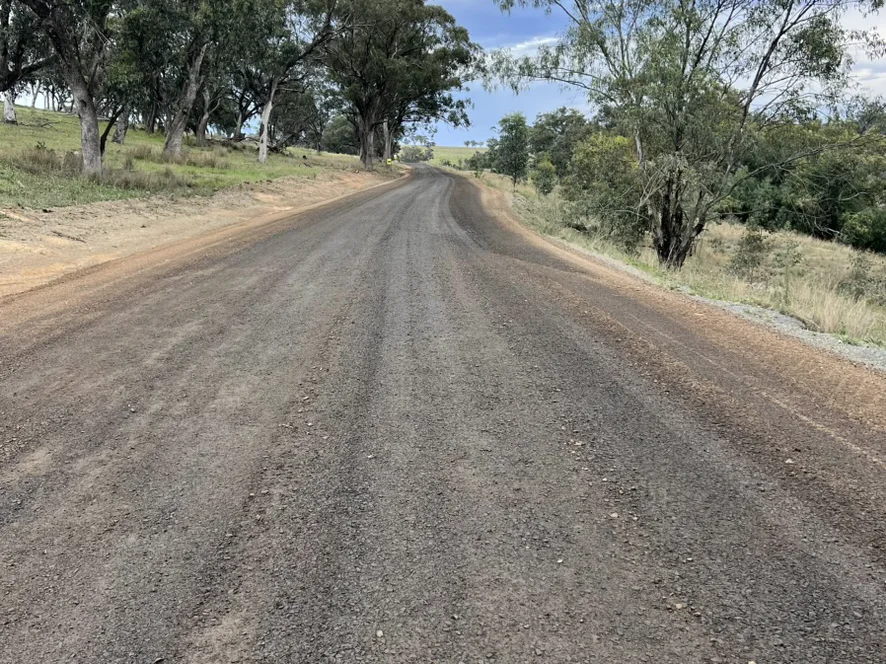
A rural gravel road before RDC treatment, the surface loose and ravelling with stone standing proud of the fines Before The same road after RDC treatment, the surface even and tightly bound from edge to edge After
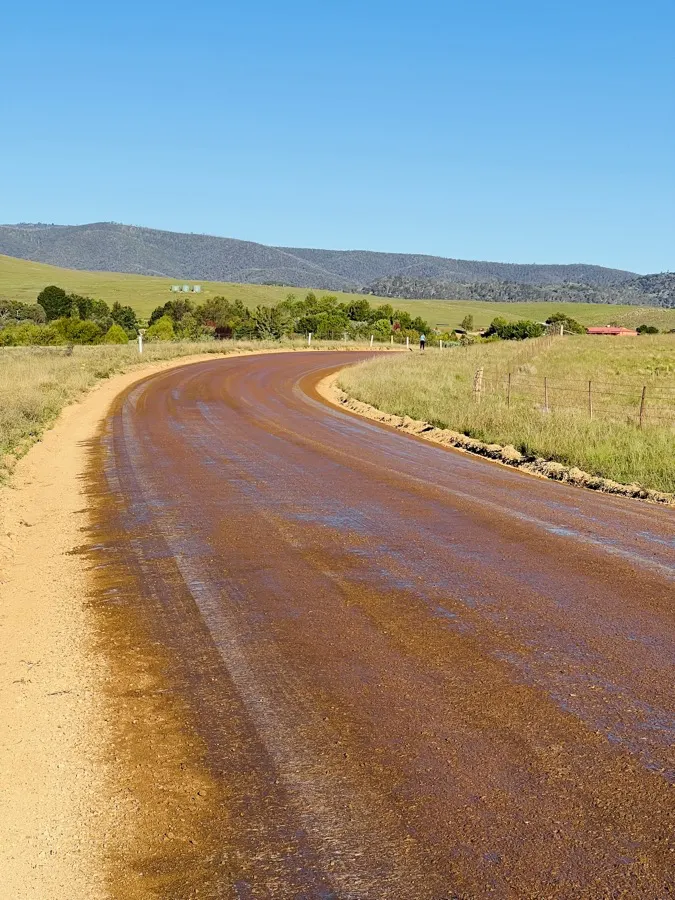
The same rural road, photographed before and 7 months after RDC treatment. The darker surface is RDC drawing moisture from the air — not rain, and not a water cart.
Enquire about RDC
The surface it leaves A treated rural road, filmed on site.
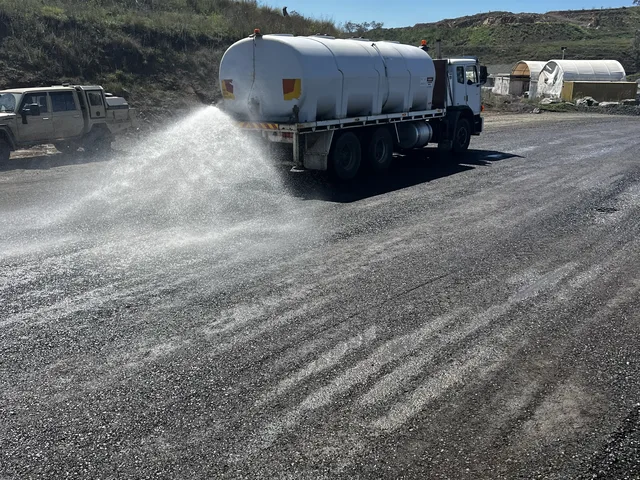
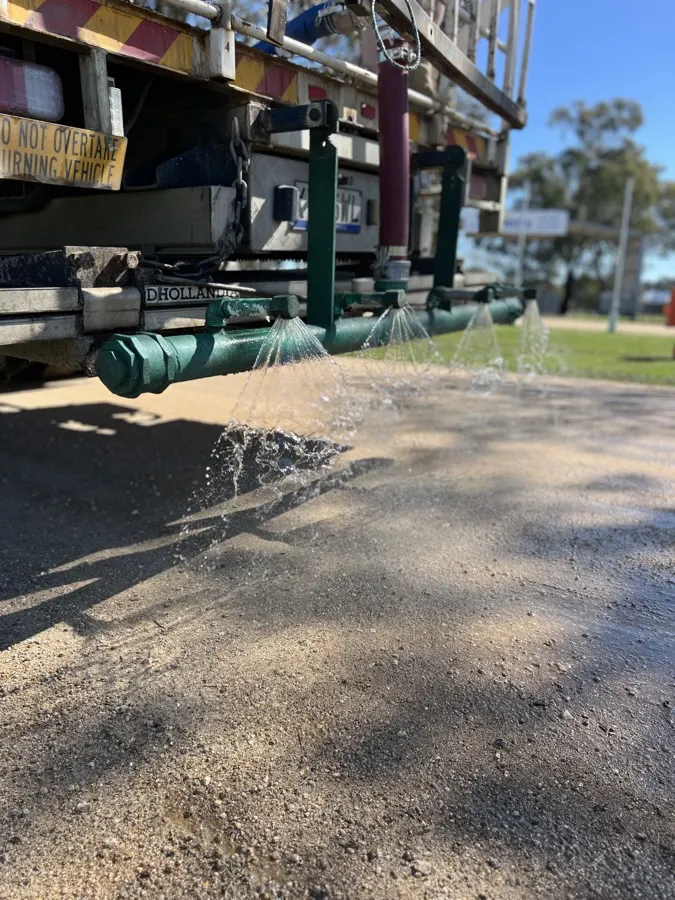
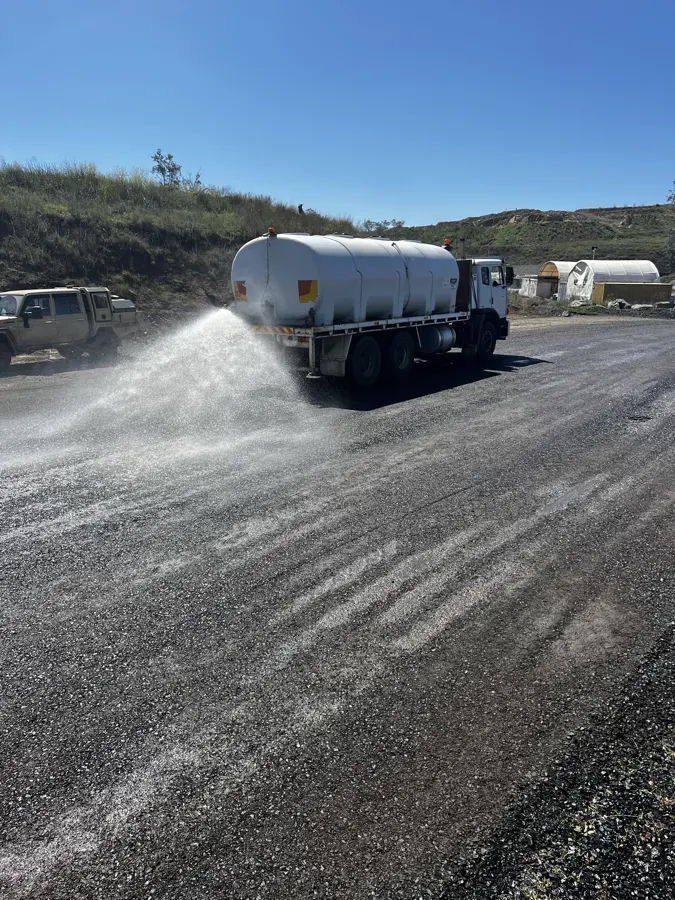
RDC spraying from the bar at the rear of a water cart, close to the road surface
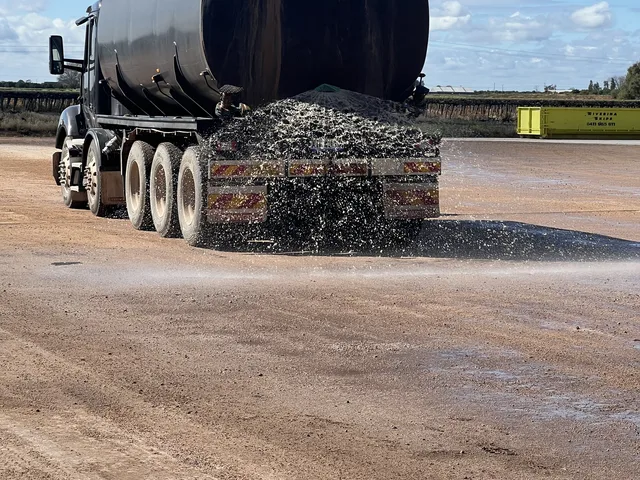
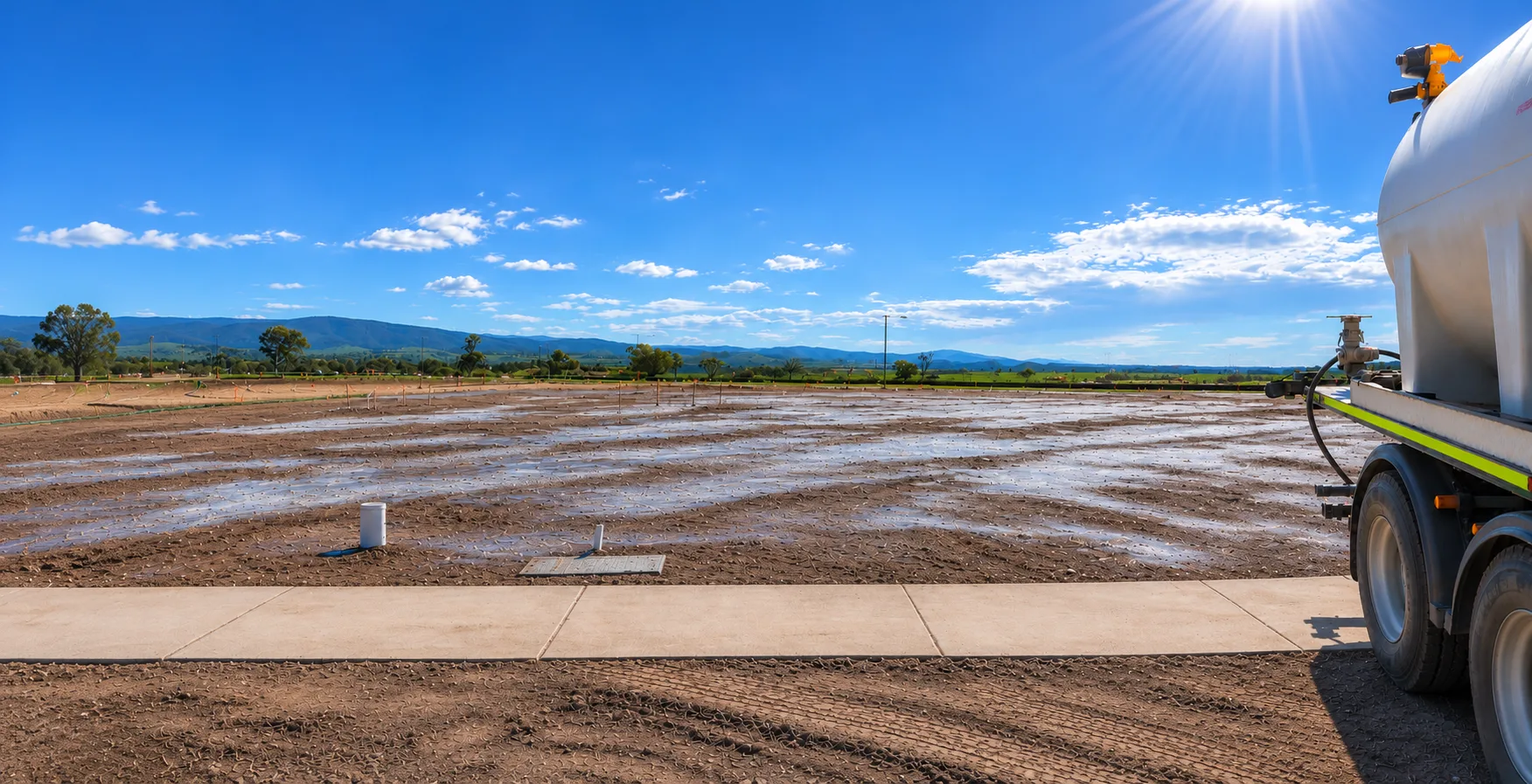
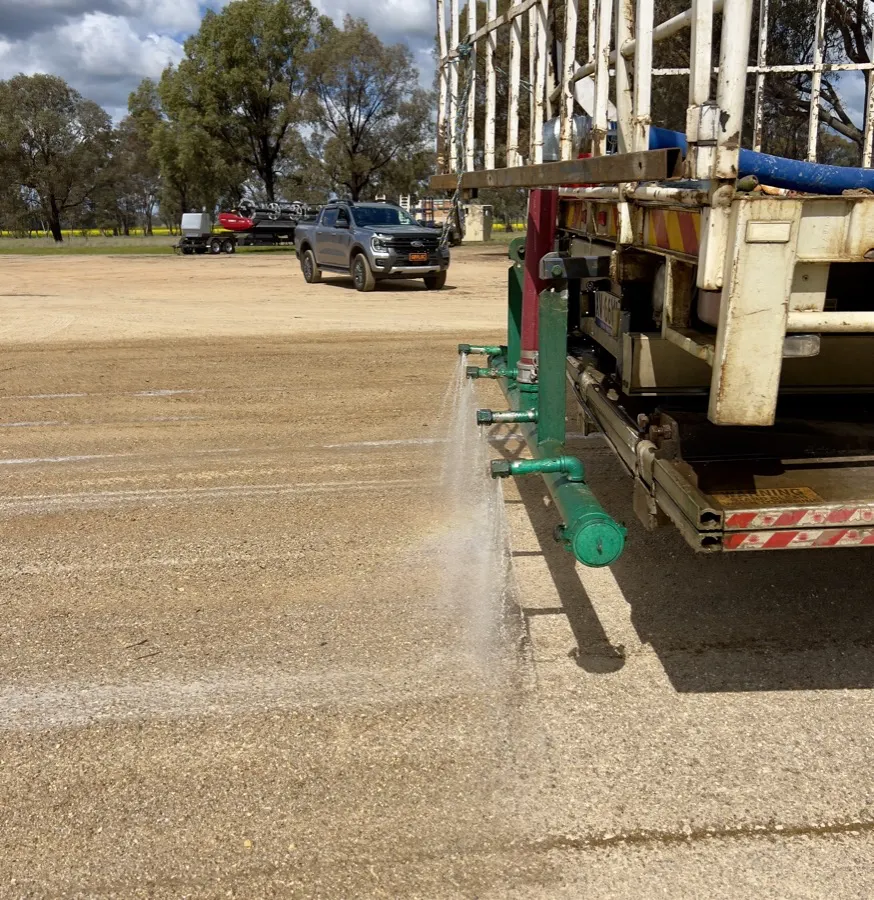
A water cart applying RDC across a compacted pad, with a ute and rig behind
A water tanker spraying RDC across a quarry hardstand
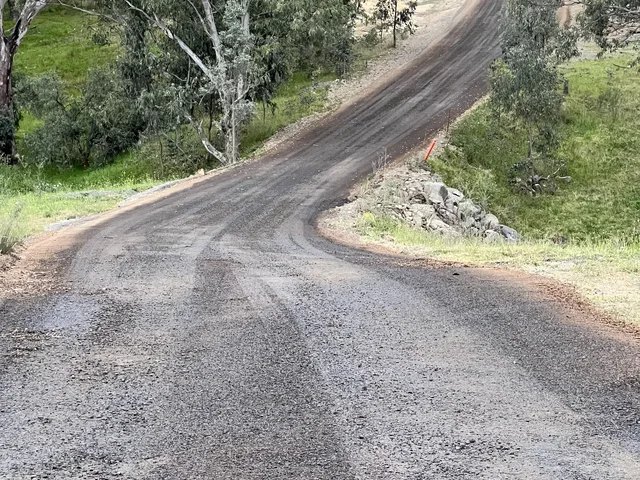
A freshly treated gravel road curving away through farmland

RDC on site

Applied with the gear already on site.

RDC goes on through conventional water carts and spray equipment, so a crew applies it with the plant it already runs and the method it already knows.

Treatment rates are set to the pavement, the traffic it carries and the result the site needs, rather than to a published figure.

What it leaves behind is a tighter running surface that holds its fine material in the road, instead of losing it to dust and grading.

RDC · Road Dust Control

What RDC does to an unsealed surface.

  • Moisture retention

    Attracts moisture from the atmosphere and retains it within the pavement, reducing the need for frequent watering.

  • Dust suppression

    Keeps fine particles from becoming airborne under traffic, improving visibility and reducing dust from vehicles and equipment.

  • Retaining pavement fines

    Helps bind fine materials within the road surface, maintaining cohesion and reducing material loss through dust.

  • Reduced road maintenance

    Maintains a tighter road surface, helping reduce corrugations, surface deterioration and the need for frequent grading.

  • Application using existing equipment

    Applied using conventional water carts or spray equipment, with treatment rates tailored to site and traffic conditions.

  • Flexible treatment and maintenance

    Higher initial application rates can provide longer-lasting dust suppression and pavement protection, reducing the need for frequent watering and maintenance. Periodic follow-up treatments can help maintain performance over time, depending on traffic, pavement conditions and operational requirements.

Keep good roads good.

Protect your pavement investment. Reduce deterioration. Extend maintenance intervals.

The condition of the pavement before treatment plays an important role in the performance of RDC. A well-graded, properly compacted road with sufficient fine material provides the best starting point.

By retaining moisture and helping keep those fines within the pavement, RDC can help preserve the existing running surface and reduce ongoing deterioration. Where roads have already lost significant fines, become heavily corrugated or developed substantial surface defects, some pavement preparation may be required before treatment.

The objective is straightforward — protect the investment already made in the road, rather than continually replacing material lost through dust and deterioration.

Proven where roads work hardest.

From quarry haul roads and mine sites to rural roads and industrial areas, Gravel Lock delivers practical, site-specific solutions through the right products and application methods, proven in demanding Australian conditions.

See our projects

A selection of Gravel Lock applications across quarries, haul roads, council networks and private sites — what was treated, and what it changed.

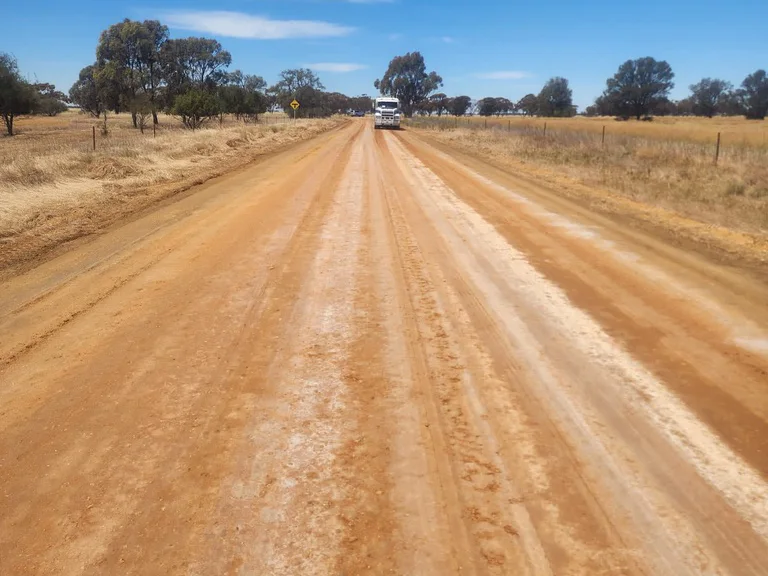
A grain truck on a treated gravel road running straight between stubble paddocks under a clear sky

Rural grain haulage route VIC

This rural road serves a grain storage facility that takes about 250,000 tonnes a season, on an estimated 5,750 truck visits a year. The gravel section was graded before and after every harvest and still broke up through winter under heavy vehicles. The council trialled RDC in November 2023, applied by its own grader crew during a routine maintenance grade, with the road never closed to traffic.

  • No grading maintenance in 24 months Two full harvest seasons and two winters since the single treatment, with no grading or re-sheeting either.
  • Water cart use almost eliminated Watering for dust suppression stopped, easing demand on local supply and sediment runoff into neighbouring farmland.

An unexpected but highly beneficial outcome was how well the road performed during winter conditions. After rain events and heavy traffic, the surface did not rut or deteriorate. The treated pavement remained intact and was able to withstand excess moisture.

Council trial report, prepared by the shire’s civil engineer
Location
Victoria
Industry
Council roads — grain haulage
Product
RDC Road Dust Control
Treated
November 2023
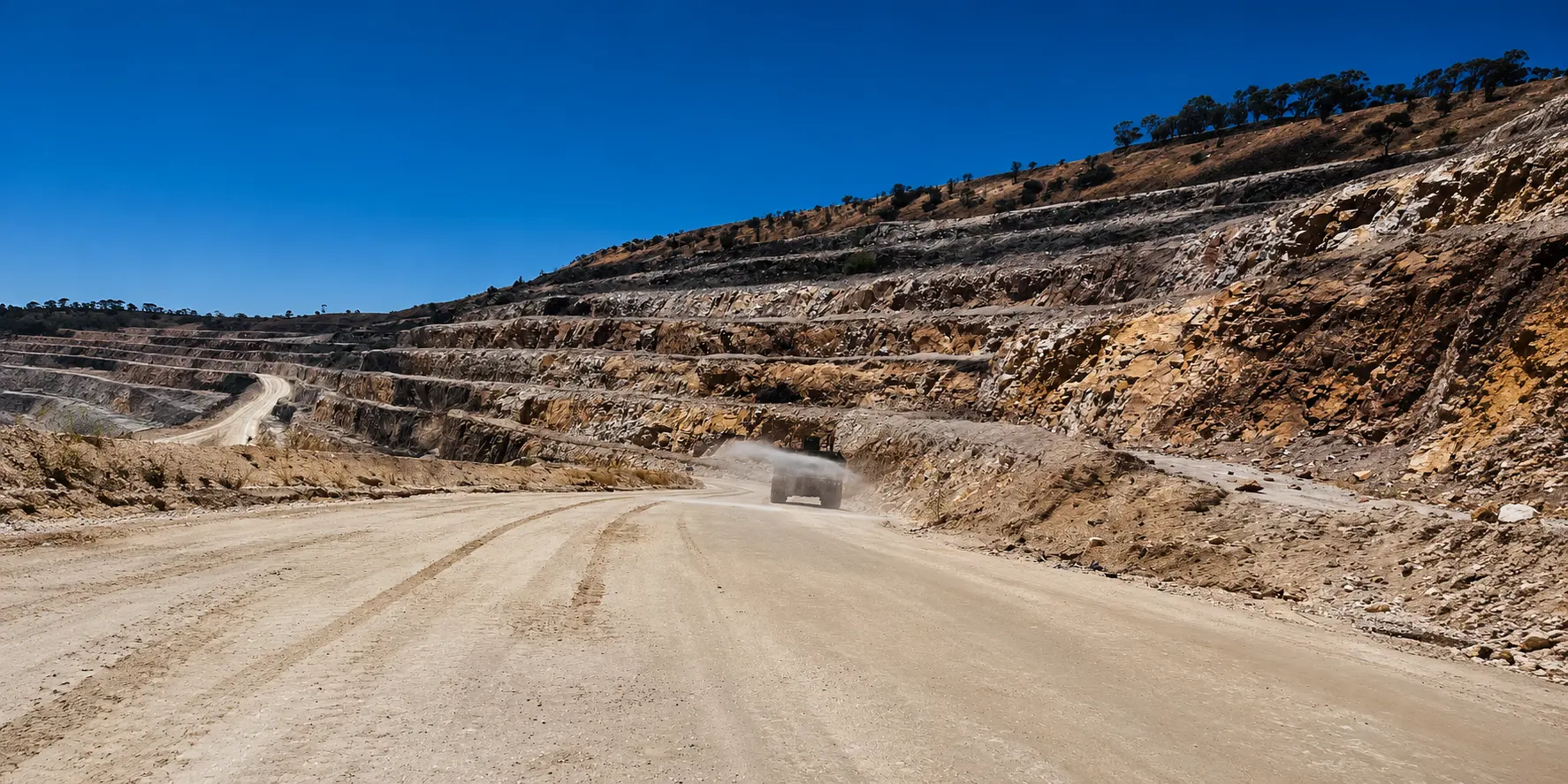
A treated quarry entry haul road running uphill between gum trees, the surface tight and even from edge to edge

Blue metal quarry NSW

The main entry road and weighbridge access at this long-established blue metal quarry are among the most heavily trafficked ground on site, carrying roughly 400 truck movements a week. Both were watered constantly and still shed their fines. Gravel Lock supervised the first application on 2 September 2025: the 2.1 km haul road at a 20% dilution with daily top-ups for four days, and the weighbridge loop at 3 litres per square metre of straight RDC.

  • Watering cut to once every 10 days On the 2.1 km entry and exit haul road, down from several applications a day.
  • No maintenance watering at the weighbridge None required since treatment, with that surface expected to hold for over nine months.
  • Dust down within hours Visibility on the entrance road and around the weighbridge improved the same day, and loose aggregate stopped moving under braking.

The results speak for themselves, far less dust, safer conditions for trucks and light vehicles and a pavement that’s holding up well without the usual wear or maintenance. We’ve cut right back on water cart use and interactions with traffic, which means lower costs, less downtime and more efficient operations overall.

Jeff, Operations Manager
Location
New South Wales
Industry
Quarry — stemming and quarried materials
Product
RDC Road Dust Control
Treated
September 2025
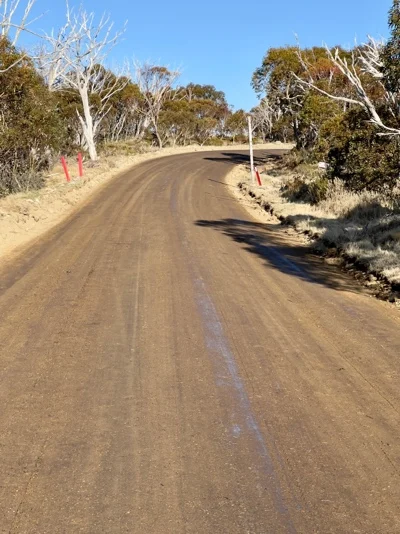
A treated gravel road running between snow gums in Kosciuszko National Park, the surface even and tightly bound

Unsealed section, Kosciuszko National Park NSW

A 1.5 km unsealed section of a primary access road in Kosciuszko National Park is maintained by Transport for NSW and re-sheeted after every snow season. RDC went on over uncompacted new pavement on 3 October 2024, without closing the road, and the section was inspected ten weeks later against untreated lengths that had been re-sheeted and rolled at the same time.

  • Aggregate held, deformation minimal Deliberate wheel spins on an uphill corner left the treated surface intact.
  • The untreated control went backwards The same material, re-sheeted the same day, corrugated, potholed and lost its fines.
  • Further work commissioned TfNSW went on to have Gravel Lock treat road shoulders on a major highway section elsewhere in the region over Christmas 2024.
Location
Kosciuszko National Park, New South Wales
Industry
National park roads — Transport for NSW
Product
RDC Road Dust Control
Treated
October 2024

More projects

Full case studies, with rates, materials and site conditions, are available on request.

  • A water tanker discharging on a construction haul road TEL Alliance Project NZ Highway construction · 2014 A 28 km haul road went from four water carts to one, saving $2,500+ a week, with no grading needed for the seasonCase study (PDF, 2 pages) RDC
  • A water tanker spraying a quarry road, the spray coming from beneath the tank Winstone Quarries NZ Quarry 80%+ water savings and $50,000+ saved annuallyCase study (on request) RDC
  • A treated gravel road running through gum trees Far North District Council NZ Council roads · 2014 to 2020 Six summers of gravel road dust control across multiple sites in NorthlandCase study (PDF, 2 pages) RDC

Results from Gravel Lock field applications. Performance varies with material, traffic and climate.

Supplied as

Delivered in the format your site runs on.

Flexible supply options to suit your operations and project needs.

From bulk deliveries to smaller quantities and ready-to-use packaged products, Gravel Lock Australia provides practical supply solutions tailored to your site, equipment and requirements.

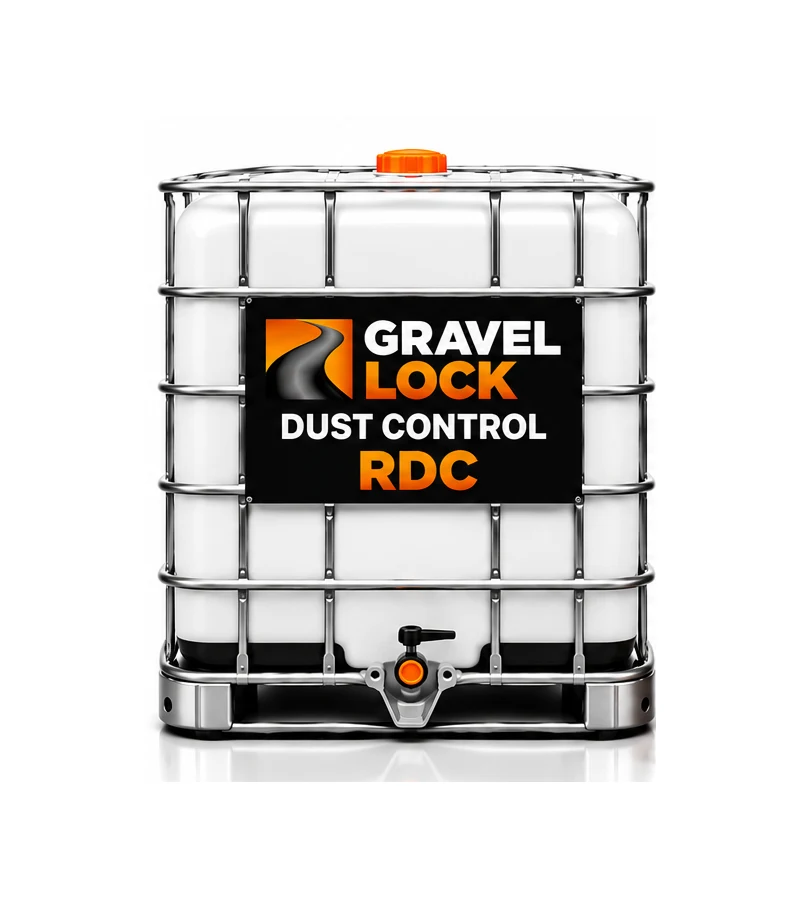
  1. RDC dust control IBC tote

    RDC

    Road Dust Control

    1,000 L IBC or bulk tanker

    Available in 1,000 L IBCs or bulk tanker deliveries, with supply and freight arrangements tailored to project requirements. Storage tanks, pumps and application guidance can also be arranged where required.

More from Gravel Lock

Same sites. Different problems.

Dust, exposed ground and failing pavement usually turn up on the same job. Here is what handles the other two.

Let's lock down your site.

Tell us about your roads, stockpiles or potholes. We'll recommend a product, a rate and a trial plan.

sales@gravellock.com.au
I'm interested in

We only use your details to reply to your enquiry.